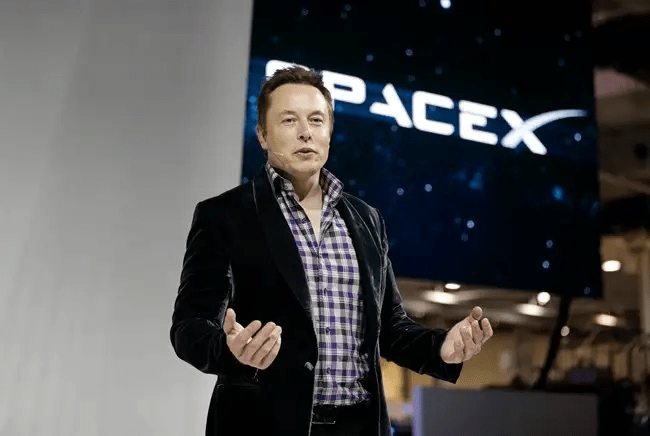
Elon Musk’s aerospace giant, SpaceX, is reportedly gearing up for its highly anticipated stock market debut next month. While the public listing has triggered immense enthusiasm across the global financial landscape, historical trends from past mega-IPOs suggest that high-profile market entries do not always translate into robust investor returns.
This upcoming Initial Public Offering (IPO) represents the first time the rocket and satellite manufacturer will be accessible on public exchanges. The buzz has captured the attention of a wide demographic, ranging from Wall Street institutional giants to retail traders globally, including significant interest from investors in India.
IPO Momentum Builds on Wall Street
Reports indicate that SpaceX has formally submitted its prospectus to list on the Nasdaq exchange under the ticker symbol “SPCX.” Financial insiders estimate the company’s valuation to land between a staggering $1.75 trillion and $2 trillion. If realized, this debut will secure a spot as one of the largest corporate listings in financial history.
The Hidden Risks of Mega-Listings
Despite the prevailing market euphoria, financial analysts are advising a tempered approach. Historically, massive and heavily publicized IPOs often fail to live up to their initial hype.
A recent data analysis compiled by Reuters examined the 50 largest corporate listings over the previous five years. The findings reveal a stark reality:
Underperformance: Roughly 75% of those major IPOs lagged behind the S&P 500 index.
The Return Gap: Investors in these mega-IPOs saw average gains of approximately 27%, whereas the broader S&P 500 benchmark yielded nearly 53% returns over the identical timeframe.
Commenting on the trend, Dennis Dick, a proprietary trader at Triple D Trading, noted that making a profit from these high-profile companies is incredibly challenging unless an investor secures allocation prior to the actual IPO day.
Sky-High Valuations and Financial Hurdles
SpaceX’s projected market valuation has triggered intense debate among economists. Analysts point out that the company’s price-to-sales ratio could approach 100—a premium that dwarfs even high-flying artificial intelligence pioneers like NVIDIA.
The underlying financials also carry risk. SpaceX has poured over $15 billion into developing its ambitious Starship program, contributing to an estimated net loss of $5 billion last year. Nevertheless, a string of successful recent test flights for Starship has kept investor sentiment remarkably optimistic.
Warning against blind optimism, Professor Jay Ritter of the University of Florida remarked that while the long-term growth narrative for these corporations can seem incredibly compelling, reality frequently diverges from expectations.
Roadblocks for Indian Retail Investors
Directly participating in the SpaceX IPO will present steep hurdles for Indian residents. Financial experts highlight that primary allocations in major U.S. public offerings are typically restricted to institutional players and select global brokerages.
While Indian citizens can acquire foreign equities using the Reserve Bank of India’s (RBI) Liberalised Remittance Scheme (LRS)—which caps outbound investment at $250,000 annually—navigating the IPO allocation itself remains complex.
Sonam Chandwani, Managing Partner at KS Legal & Associates, emphasized the importance of compliance, advising individuals to strictly adhere to RBI and SEBI frameworks while avoiding unverified, unregulated pre-IPO investment platforms.
Popularity is Not a Guarantee of Profit
Recent market history is filled with cautionary tales of high-profile listings that faltered. For instance, electric vehicle startup Rivian has seen its stock plummet over 80% since its debut, while China’s ride-hailing giant Didi Global was forced to delist entirely from the New York Stock Exchange. Conversely, some tech-heavy listings, such as semiconductor designer Arm Holdings, have bucked the trend to post stellar returns.
Ultimately, market experts reiterate a foundational investing rule: media hype and cultural popularity are never guarantees of long-term profitability
 The free voice