Remember the collective groan when the trailer of latest film in the Welcome franchise, Welcome to the Jungle dropped? Or the online outrage and endless ‘Bollywood is dead’ statements after the trailer release of Dhamaal 4? Bollywood is so much dependent on sequels that every year, some of the biggest and most anticipated films of the year are either sequels, or, in one way of another, are related to a franchise.
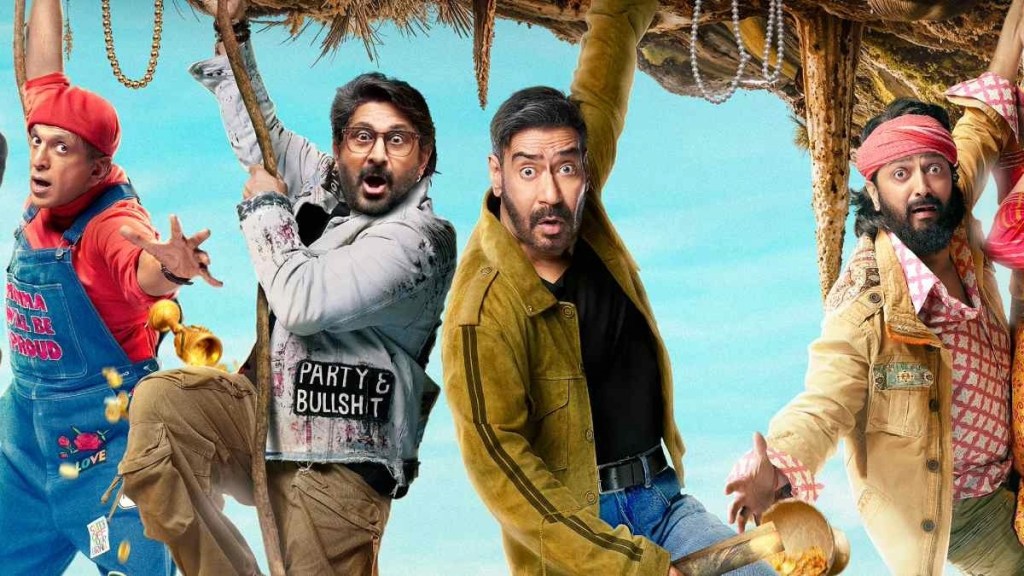
Now, despite the evident hatred for sequels, if we come to the cold hard facts, it becomes fairly obvious that disapproval on internet doesn’t always relate with the ground reality. Despite facing immense ridicule, both Welcome to the Jungle and Dhamaal 4 have collected ₹192 and ₹179 crores respectively, till now; in the case of former, it’s the highest in its franchise’s history. It’s clearly evident that there is a massive rift between our vocal desire for original art and our actual purchasing habits. The huge number of upcoming sequels, that are either ready to release, or are in the pipeline, makes it very obvious in which the direction the wind is blowing.

These episodes expose a fascinating duality in the way we consume cinema. On one hand, people demand artistically-driven, high-concept cinema, but when the weekend arrives, this frustration is turned into cash at the box office, and all the outrage does nothing to quell the ringing of box office register. And it’s not a new phenomenon either, because if data is to be believed, year’s highest grossing films are mostly sequels and franchise films. For instance, in 2025, among the highest grossers of Bollywood, there is a considerable presence of sequels like Kesari 2, Housefull 5, Raid 2, De De Pyaar De 2, War 2, Jolly LLB 3 and also a franchise film like Thamma. The same goes in 2024 with Bhool Bhulaiya 3, Stree 2, Singham again, Munjya, etc., and in 2023 with films like Tiger 3, Dream Girl 2, Fukrey 3, OMG 2, Gadar 2 etc. The same trend continues if looked even further back.
THE COMFORT OF THE FAMILIAR
Looking closely at how we actually consume these movies, it becomes fairly obvious that the human brain, in most cases, naturally leans towards the comfort of the familiar over the gamble of the new. People might loudly demand new kind of cinema, but when it comes to voting through their wallet, they consistently pick familiarity over novelty. People might demand different kind of cinema, but when it comes time of buying the ticket, this appetite of novel kind of cinema magically vanishes.
With a franchise film, people exactly know what they are going to get: familiar characters, recycled plot, and predictable resolution. For a mass audience, who is looking for 3 hours of escape, this guarantee of familiarity is a far safer investment than an acclaimed but entirely unknown commodity. Going to cinema isn’t cheap either, and once people are shelling ₹300+ on a single trip to cinema, the sense of adventure becomes less and less viable. When spending ₹2,000+ on a family outing to cinema, nobody thinks of going to an acclaimed auteur-driven cinema, because they want to shell their money on entertainment and escapism, things that a masala franchise film provides in ample.

Bollywood, and Indian cinema in general, is heavily reliant on star-worship culture. The biggest stars of the industry command a huge fanbase, and since sequels are a low-risk and high-reward propositions, most of the stars rely on them to satiate the needs of their respective fanbases. There is a reason why some actors are exclusively doing sequels and nothing else.
The majority of audience that comes to watch films in theatre aren’t from metros or Tier-1 cities, and watching movies for them isn’t about critical analysis of themes, techniques, and plot. They are there purely for escapism, to have a good time, or to share a communal experience of watching their favourite actors on the big screen. A mass-market franchise film hits the sweet spot between escapism and familiarity.
THE ILLUSION OF INTERNET
Then, there is the idea that online outrage machine operates in a completely different dimension than the actual theatrical business. The people dissecting every frame of a trailer, or complaining about clichéd tropes don’t represent the majority of the audiences. The people outraging on the internet belong to a very specific urban demography, a very small group, and also not the target audience of those films which they are raging about. The outrage on forums of Reddit, X, Instagram etc. doesn’t really penetrate to Tier-2, Tier-3 or rural audiences much, because for those audiences, mostly the film is a 3-hour break from reality, and not something worth pondering over much.
THE BOTTOM LINE
Ultimately, this entire situation forces us to confront a rather uncomfortable truth about the entertainment business: the studios aren’t the ones killing original cinema; we are. As long as pouring money into an established universe remains a highly calculated business decision with a historical safety net, the industry has absolutely no reason to change its formula. No matter how much people rave about Tumbbad and Udaan on the internet, if they keep rewarding films like Singham again and Housefull 5, nothing is going to change.
It is clearly evident that until our actual spending habits begin to align with our endless social media rants, the cameras will keep rolling on the next sequel, the producers will keep making bank, and the cinephiles will keep outraging about the dying creativity, and the death of cinema itself.
 The free voice