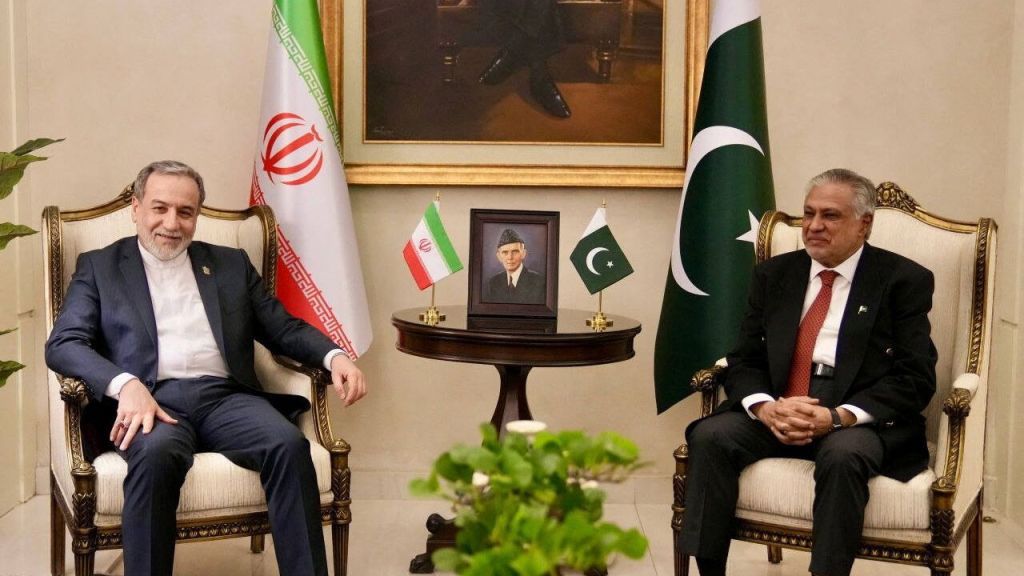
Pakistan’s mediation efforts have raised hopes for a ceasefire amid the ongoing conflict involving Iran, Israel, and the United States. Pakistan’s Interior Minister and Iran’s Foreign Minister met in Tehran to help de-escalate tensions.Currently, disagreements over uranium stockpiles and the Strait of Hormuz remain major obstacles to peace, while the war continues to exert serious pressure on the global economy.
Tehran During the ongoing conflict, Iran’s Foreign Minister met with Pakistani Interior Minister Mohsin Naqvi in Tehran on Friday as part of diplomatic efforts to end the violence. The meeting focused on proposals to advance U.S.-Iran peace talks and bring the war to a close. The U.S. Secretary of State noted that the discussions showed “some positive signs,” though no formal agreement has been confirmed yet.
Talks Between Pakistan and Iran
The meeting between Pakistan’s Interior Minister Mohsin Naqvi and Iran’s Foreign Minister Abbas Araghchi has accelerated diplomatic efforts to end the conflict. According to Iranian media reports, Pakistan is acting as a mediator between the involved parties, and serious discussions were held regarding potential steps toward peace.
Concurrently, the United States has indicated that it wants Iran to cap its highly enriched uranium stockpile and limit its nuclear activities. However, Iran remains firmly opposed to sending its uranium reserves outside the country.
Uranium and the Strait of Hormuz Remain Major Concerns
The primary points of contention remain Iran’s highly enriched uranium stockpile and control of the Strait of Hormuz—one of the world’s most critical oil trade routes. Any restrictions imposed by Iran in the Strait heavily impact global oil supplies and prices.
While the United States demands strict restrictions on Iran’s nuclear program, Iran insists on maintaining full control over its uranium reserves. Meanwhile, the U.S. has imposed sanctions on Iran’s ambassador-designate to Lebanon—a move Iran has condemned as “illegal” and a violation of international law.
Impact on the Global Economy
The conflict has severely disrupted global oil markets and the world economy. Prior to the war, nearly one-fifth of the world’s oil and liquefied natural gas (LNG) passed through the Strait of Hormuz. Due to the ongoing hostilities, oil prices have spiked sharply.
According to Reuters, the U.S. dollar has climbed close to its highest level in six weeks. The International Energy Agency (IEA) has also warned that if Middle Eastern oil supplies remain disrupted, the global energy crisis could deepen significantly through July and August.
Experts believe that these ongoing negotiations will determine the trajectory of the conflict in the coming days. For now, Pakistan continues its efforts to broker an agreement, while the international community closely watches the high-stakes diplomacy between the United States, Iran, and Pakistan.
sources –Reuters report, The Hindu
 The free voice