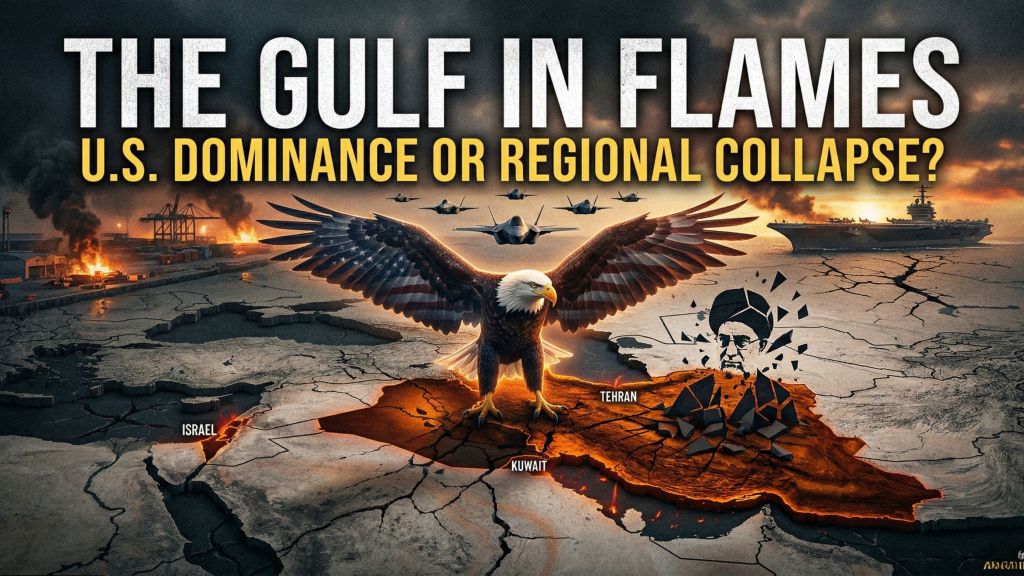
The Asian continent has been plunged into a state of unprecedented geopolitical volatility following the high-profile assassination of Iran’s Supreme Leader, Ayatollah Ali Khamenei. In a clinical and devastating joint operation conducted during the late hours of February 27-28, 2026, American and Israeli forces executed a coordinated airstrike that claimed the life of the Islamic Republic’s most powerful figure. The regional response was instantaneous and violent; Tehran retaliated by launching a massive, multi-front offensive against 14 U.S. military installations situated across seven strategic nations, including Israel, the UAE, Saudi Arabia, Kuwait, Jordan, Qatar, and Bahrain.
The scale of human suffering resulting from this sudden explosion of hostilities has sent shockwaves through the international community. According to the Human Rights Activists News Agency (HRANA), the initial crackdown and subsequent aerial bombardments have already resulted in over 7,000 confirmed deaths, with thousands of other casualties currently under investigation. While the Iranian government has officially acknowledged a death toll of 3,000, independent observers fear the true number is rapidly climbing as the smoke clears from targeted military and civilian zones.
A superpower mobilized: The Trump administration’s maximum pressure hits a flashpoint
The geopolitical stage for this confrontation was set the moment Donald Trump reclaimed the American presidency in 2025, signaling an aggressive shift toward an inevitable showdown with Tehran. Open-source intelligence and military flight-tracking data reveal that Washington was merely waiting for a tactical window, having recently deployed over 120 advanced combat aircraft to the region. This mobilization represents the most significant concentration of American air superiority in the Middle East since the 2003 Iraq War, transforming the regional airspace into a fortress of Western military might.
This massive deployment includes a sophisticated mix of E-3 Sentry AWACS for real-time surveillance, F-35 stealth fighters, and F-22 Raptor air superiority jets, all bolstered by a fleet of heavy cargo planes and aerial refueling tankers. Flight-tracking logistics confirm that this was no routine troop rotation but a long-term, sustained operational strategy designed to dismantle Iran’s defensive capabilities. The sheer volume of assets moved from bases in Europe and the United States suggests that a prolonged conflict was always the intended outcome of this strategic buildup.
Engineering a masterstroke: The shadow war between Mossad and the CIA
The precision of the “Decapitation Strike” that killed the Supreme Leader was the result of a masterclass in clandestine coordination between Mossad and the CIA. This wasn’t a reactive move but a meticulously choreographed operation aimed at paralyzing the Iranian state by eliminating its top-tier leadership in a single blow. For months, intelligence agencies utilized high-resolution satellite imagery and deep-cover human networks to track the Supreme Leader’s movements and identify his most secure bunkers. The kinetic phase was preceded by a massive cyber-offensive that effectively “blinded” Iran’s sophisticated Bavar-373 and Russian-supplied S-300 air defense systems, allowing F-35 stealth jets to strike with surgical accuracy while AWACS planes monitored the skies for any sign of a counter-attack.
Israel’s strategic timing for the strike revealed a brilliant, if ruthless, understanding of global diplomacy regarding the safety of international leaders. It is no coincidence that the operation commenced only after Indian Prime Minister Narendra Modi had safely concluded his high-stakes visit to Israel and exited the region’s airspace. By waiting for the Indian delegation to clear the danger zone, Israel ensured it did not alienate a critical global power like India, which maintains a delicate balance of interests with both Jerusalem and Tehran, particularly concerning energy security and the Chabahar Port.
Diplomatic chess: Why Israel waited for PM Modi’s departure
This diplomatic maneuvering was designed to present the world with a “fait accompli” while minimizing immediate friction with New Delhi. By framing the assassination as an act of “pre-emptive self-defense,” Israel successfully maneuvered India into a position where it could only issue neutral calls for peace and de-escalation rather than outright condemnation. This calculated restraint allowed Israel to achieve its military objectives without triggering a diplomatic rift with one of Asia’s most influential voices, marking a significant victory in the theater of international relations.
However, the death of the Supreme Leader has left Iran with its back against the wall, making the potential closure of the “Strait of Hormuz” a terrifyingly real prospect for the global economy. If Tehran decides to choke this narrow maritime artery, through which nearly 30% of the world’s oil and liquefied natural gas flows, the resulting energy shock would be catastrophic. Crude oil prices would likely shatter records, surging toward $150 per barrel and triggering a domino effect of hyperinflation that would cripple transportation and manufacturing sectors across the globe.
 The free voice