Supreme Court bench questions UNHCR’s role in granting refugee status within India’s sovereign territory, remarking that such certification appears to be running without state sanction. The court was hearing a Sudanese national’s plea pending since 2013.
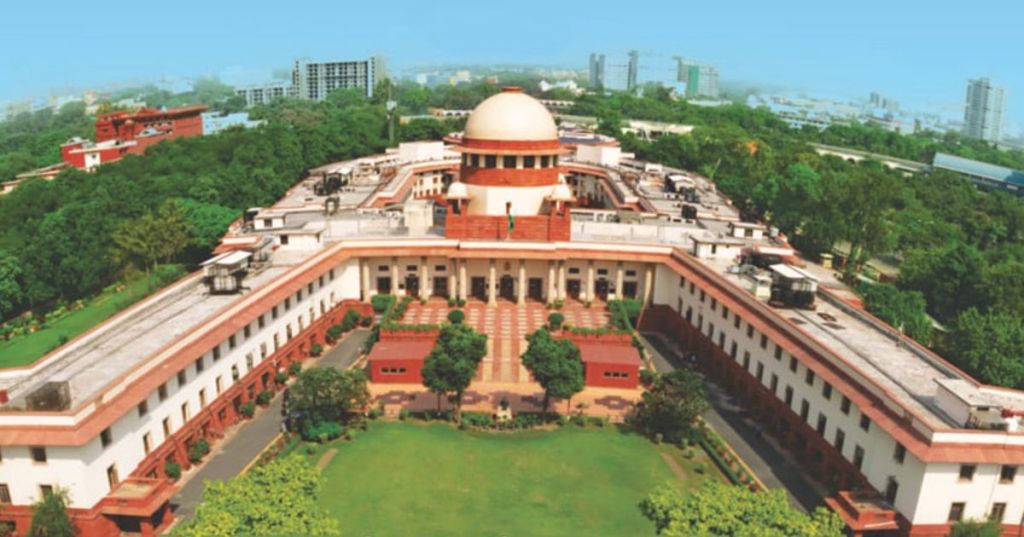
Justice Surya Kant of the Supreme Court has expressed strong criticism over the UNHCR’s practice of granting refugee identification cards to foreign nationals living in India. Calling it an overreach, he remarked that the agency seems to have “opened a showroom here and is issuing certificates.” The court’s observation came while hearing a petition by a Sudanese national seeking protection from deportation.
Court Raises Questions On Legitimacy
The bench, comprising Justices Surya Kant and Joymalya Bagchi, questioned the legality of UNHCR-issued refugee cards in India, emphasizing that such certifications hold no legal authority under Indian law. The judges pointed out that India is not a signatory to the 1951 Refugee Convention or its 1967 Protocol, meaning no international organization can unilaterally confer refugee status on Indian soil.
Justice Kant said, “India is a sovereign country. You cannot just set up shop here and begin granting statuses that have implications under our domestic law.” The court warned that such practices might create confusion about the legal standing of foreign nationals and potentially mislead authorities.
Centre Asked To Clarify Its Policy
The Supreme Court directed the Centre to submit a detailed clarification on its policy regarding foreign nationals holding UNHCR-issued refugee cards. It also asked whether these cards are treated as valid in visa, residence, or deportation cases.
During the hearing, the Additional Solicitor General representing the Union government stated that UNHCR identification cards may be issued for internal humanitarian purposes but have no legal standing in India. He emphasized that decisions regarding asylum, deportation, or residency are solely made by the Ministry of Home Affairs.
Justice Kant further noted that the creation of “parallel documentation” by international agencies could lead to administrative confusion. “If such certificates are being distributed freely, it raises serious questions of oversight. Tomorrow anyone can claim immunity by flashing one of these cards,” he said.
Broader Implications And Next Steps
The petitioner’s counsel argued that the Sudanese national has lived peacefully in India since 2013 and deserves humanitarian protection. The bench acknowledged India’s tradition of sheltering displaced people but reiterated that refugee identification cannot bypass government authority.
The matter has been adjourned, with the court awaiting the Centre’s policy response on UNHCR’s role and the recognition of foreign nationals as refugees. Legal experts say the court’s observations may prompt a reassessment of how refugee documentation is managed in India, which, despite lacking a formal refugee law, hosts thousands of displaced persons from Myanmar, Afghanistan, Sudan, and Somalia.
 The free voice