Under a landmark defense pact, Islamabad signals its readiness to share nuclear deterrence with Riyadh, raising questions for Israel, India, and regional stability.
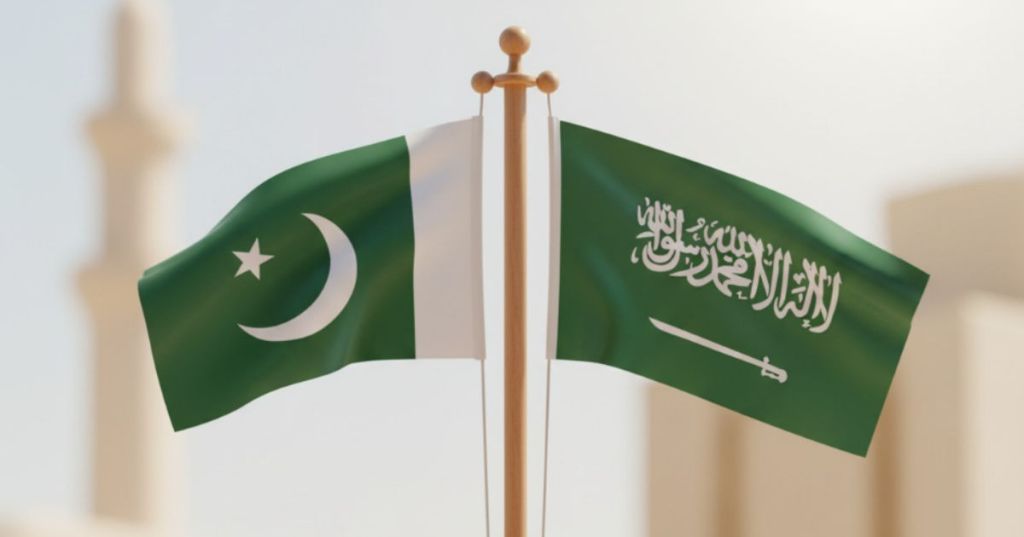
Pakistan has openly confirmed for the first time that its nuclear capabilities could be extended to Saudi Arabia if needed, following a recently signed defense pact. Defense Minister Khawaja Mohammad Asif said in a televised interview that Pakistan’s nuclear arsenal, developed primarily to counter India, “will be made available” to Riyadh under the agreement.
Defense Pact Establishes Mutual Security Commitment
The pact, signed in Jeddah by Saudi Crown Prince Mohammed bin Salman and Pakistani Prime Minister Shehbaz Sharif, states that an attack on one country will be treated as an aggression against both. Analysts note that the agreement sends a strong strategic signal, particularly to Israel, which is long considered the only nuclear-armed state in the region. The announcement comes after Israel’s recent strike on Hamas leaders in Doha, raising regional security concerns.
Pakistan Criticizes Israel While Highlighting Its Nuclear Transparency
Khawaja Asif criticised Israel for not declaring its nuclear weapons to the International Atomic Energy Agency (IAEA), in contrast to Pakistan, which maintains monitoring agreements with the agency. Both Pakistan and Saudi Arabia remain supportive of the Palestinian cause and do not maintain formal diplomatic ties with Israel. Analysts say the pact reflects broader regional concerns following the October 7, 2023, Hamas attack and subsequent military escalations involving Iran-backed groups.
Nuclear Deterrence Plays Central Role Amid Regional Tensions
The pact follows recent escalations between India and Pakistan, including cross-border missile and drone strikes triggered by a mass shooting in Kashmir. Pakistan currently has around 170 nuclear warheads and long-range missiles capable of reaching Israel. Historically, Saudi Arabia has supported Pakistan’s nuclear program financially, allowing Islamabad to advance its capabilities despite sanctions. Officials suggest that the pact could be expanded to other countries over time, although negotiations will require careful consideration.
By extending its nuclear umbrella to Saudi Arabia, Pakistan is reaffirming a long-standing partnership while positioning itself as a key player in a changing regional security landscape. The move underscores the intersection of Israel’s strategic actions, Iran’s regional influence, and India-Pakistan rivalry in shaping Middle East and South Asian security dynamics.
 The free voice