The United Kingdom, Canada, and Australia have formally recognised the State of Palestine, marking a major shift in Western policy on the Israeli-Palestinian conflict. The move ahead of the UN General Assembly signals renewed support for a two-state solution and increases diplomatic pressure on other Western nations to reconsider their stance.
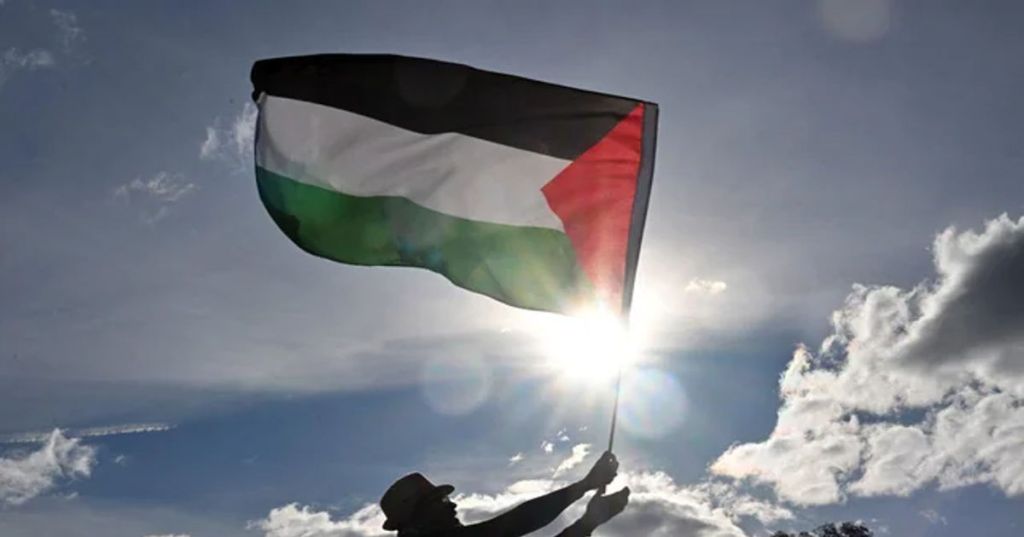
The United Kingdom, Canada, and Australia on Sunday officially recognised the State of Palestine, signalling one of the most significant Western policy shifts on the Israeli-Palestinian conflict in decades. The timing, just before this week’s high-stakes United Nations General Assembly in New York, reflects a coordinated effort to revive momentum for a two-state solution.
UK Leads Recognition With Shift in Middle East Policy
British Prime Minister Keir Starmer announced on X that the UK “formally recognises the State of Palestine” to restore “the hope of peace for Palestinians and Israelis.” This decision represents a sharp change in London’s approach to the Middle East, moving away from previous reluctance to officially recognise Palestinian statehood while continuing to support negotiations between both sides.
Canada Criticises Israeli Policies While Making Recognition Official
Canada followed with a statement from Prime Minister Mark Carney, emphasising that Ottawa has supported a two-state solution since 1947 but is now making its recognition formal. Carney criticised Israel for “an unrelenting policy of settlement expansion” and its military campaign in Gaza, while noting the Israeli government’s repeated rejection of a Palestinian state.
Australia Confirms Recognition With Conditions on Governance
Australia joined with a joint statement from Prime Minister Anthony Albanese and Foreign Minister Penny Wong, calling Palestine “an independent and sovereign state.” The statement specified that Hamas should play no role in governance and highlighted reforms promised by the Palestinian Authority, including democratic elections, improved governance, and recognition of Israel’s right to exist.
Recognition Signals Global Diplomatic Pressure
The coordinated action aligns these Western nations with the Arab world and Global South, who have long supported Palestinian statehood. It also increases diplomatic pressure on other Western powers, particularly the United States and EU countries, to reassess their positions on Palestine.
Palestine’s Mission to the UN welcomed the recognition, describing it as “courageous” and consistent with international law. As the UN General Assembly convenes in New York, the joint recognition by London, Ottawa, and Canberra is expected to influence discussions and put the two-state solution back at the center of global diplomatic debate.
 The free voice