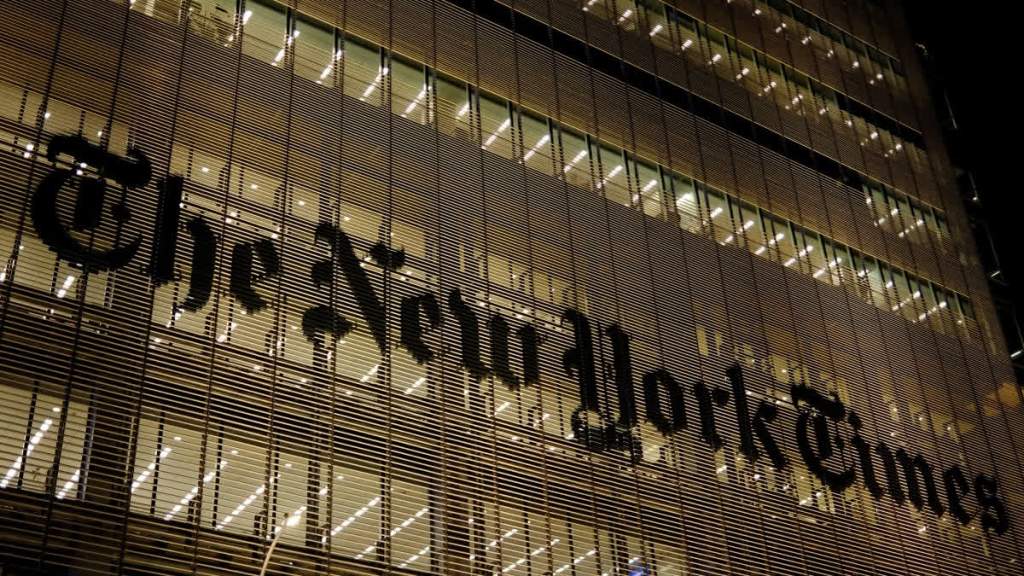
Donald Trump has launched a massive $15 billion defamation and libel lawsuit against The New York Times, branding it as “the worst newspaper in the history of America.” The former U.S. President accused the publication of consistently spreading falsehoods about him, his family, his business, and the “America First” movement. The lawsuit was filed in a Florida court and publicly announced by Trump via his social media platform, Truth Social.
Trump’s Harsh Criticism of The New York Times
In a lengthy post shared on Truth Social, Trump expressed his fury toward The New York Times, describing it as “the vilest and most degraded newspaper in our country’s history.” He further claimed that the paper has become the “mouthpiece of the radical left Democrat Party,” singling out its front-page support for Vice President Kamala Harris as unprecedented and politically biased. According to Trump, the newspaper has relentlessly engaged in a decades-long campaign of disinformation aimed at discrediting him, his family, and the MAGA movement.
He stated, “Today, I am proud to file a $15 billion defamation and libel lawsuit against The New York Times. This publication has propagated lies against me, my business, and our America First agenda, much like the fake news networks ABC and CBS, which we held accountable in the past.”
The Basis of the Lawsuit: Alleged Lies and Defamation
Trump specifically objects to the Times’ coverage of Kamala Harris, equating it to “illegal election donations,” and views it as part of a broader effort to undermine him. He insists that The New York Times published knowingly false information with malicious intent.
Legal Hurdles Ahead
Legal experts point out that for Trump to succeed in a defamation case, especially as a public figure, the burden of proof is high. Under the First Amendment, the press enjoys broad protections, making it difficult to prevail unless it can be demonstrated that the newspaper acted with “actual malice.” Additionally, because the case is filed in Florida, the Times may challenge the court’s jurisdiction, adding another layer of complexity to the legal battle.
 The free voice