Defence Minister Rajnath Singh refused to endorse the draft statement at the SCO Defence Ministers’ meeting in Qingdao, citing omission of key terrorism issues. The decision prevented a joint communique, reflecting India’s insistence on accountability for terror groups amid rising tensions with Pakistan after the Pahalgam attack.
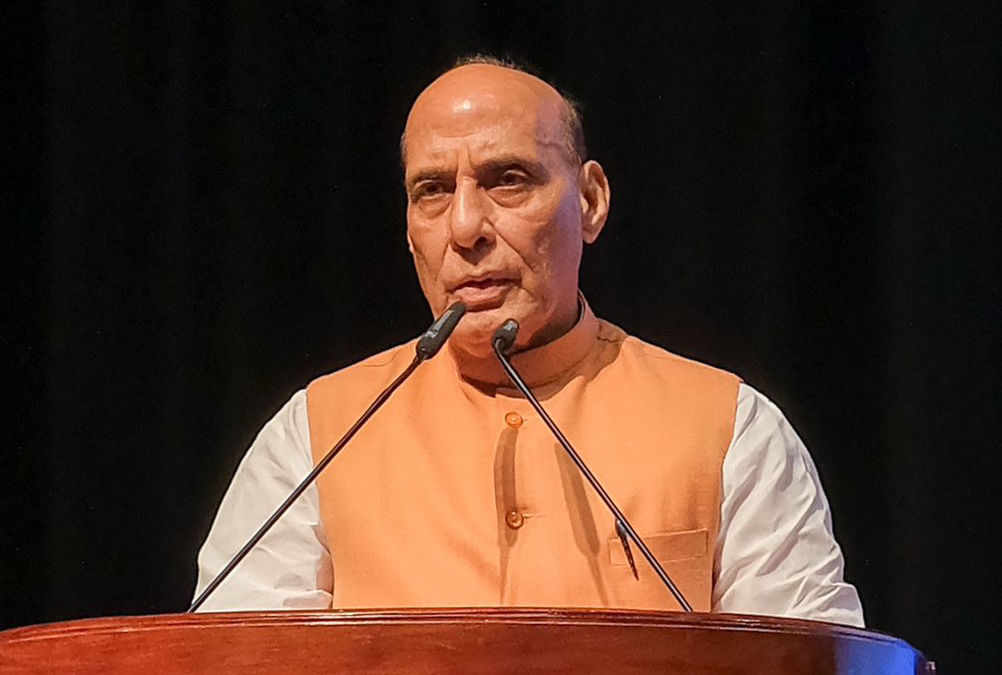
Defence Minister Rajnath Singh declined to sign the draft statement at the SCO Defence Ministers’ meeting in Qingdao, China, as it failed to address India’s concerns on terrorism. His refusal stopped the issuance of a joint communique, highlighting India’s firm stance against proxy terror groups, especially following the deadly Pahalgam attack in Jammu and Kashmir earlier this year.
India Objects to Omission of Pahalgam Attack
The refusal came after the draft statement included references to militant activity in Pakistan’s Balochistan region but omitted India’s concerns regarding the April 22 Pahalgam terror attack, where 26 civilians were killed. The Resistance Front, linked to Lashkar-e-Taiba, claimed responsibility. New Delhi maintains Pakistan provides shelter to such groups, a charge Islamabad denies. Officials confirmed India sought explicit references to the attack in the final statement.
SCO Meeting Highlights Differences on Terrorism Accountability
MEA spokesperson Randhir Jaiswal stated that India’s concerns were not reflected in the draft, preventing consensus. “India wanted concerns on terrorism to be reflected in the document, which was not acceptable to one particular country, and therefore, the statement was not adopted,” he said, without naming Pakistan. Singh emphasized the need for collective action against terrorism, warning that peace and prosperity cannot exist alongside non-state actors and extremist groups.
SCO Structure and China’s Growing Influence
The SCO includes 10 member states: China, Russia, India, Pakistan, Iran, and Central Asian nations. Established in 2001 to promote regional security and cooperation, the grouping has increasingly come under Chinese influence, particularly as Russia remains focused on the Ukraine conflict. Differences over terrorism accountability at the defence meeting underscore ongoing challenges in building consensus among member states.
Next SCO Summit and Future Implications
The next SCO Council of Heads of State summit is scheduled in Tianjin, China, later this year. India’s firm stance on terrorism is expected to remain a key issue, influencing joint statements and highlighting the challenges of multilateral diplomacy when security concerns collide with differing national perspectives.
 The free voice