
In a shocking development, Kazan, often referred to as Russia’s third capital, witnessed a 9/11-style attack involving eight combat drones targeting six high-rise buildings. Fortunately, no casualties have been reported. Kazan is situated approximately 800 kilometers east of Moscow. The attack has been blamed on Ukraine, though Kyiv has not claimed responsibility.
The incident echoes the tragic events of September 11, 2001, when Al-Qaeda terrorists hijacked four passenger planes, crashing them into the World Trade Center and other buildings in the United States, resulting in over 3,000 deaths and 6,000 injuries.
Kazan, Russia’s third-largest city, holds immense economic significance. It is a hub for industries like passenger aircraft, helicopter engineering, textiles, and food processing. The city has also hosted major events, such as the 2018 FIFA World Cup and the BRICS summit in October 2024. Following the attack, Russian security agencies evacuated high-rise buildings, and Kazan Airport was temporarily shut down before resuming operations.
Escalation of Ukraine-Russia Tensions
This attack comes amid heightened tensions between Ukraine and Russia. On December 18, 2024, Ukraine reportedly assassinated Igor Kirillov, the head of Russia’s nuclear and chemical weapons team, alleging his involvement in 5,000 chemical weapon attacks in Ukraine. Just days earlier, Ukraine launched a missile strike on Kursk, killing six people, including a child. In retaliation, Russia fired hundreds of missiles, killing one person and injuring 13 others.
Ukraine’s strategy appears increasingly aggressive, shifting from a defensive posture to targeting Russian commanders and deploying long-range missiles.
Zelensky’s Strategic Calculations
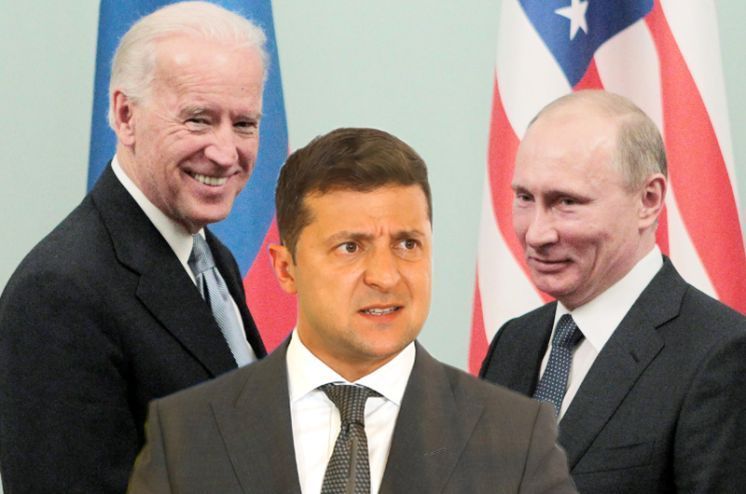
Ukrainian President Volodymyr Zelensky is reportedly aware that U.S. support might wane once Donald Trump assumes office next month. Trump, during his campaign, promised to end global conflicts involving the U.S., including the Ukraine-Russia war. Leaked U.S. media reports suggest a ceasefire plan, under which current territorial holdings would remain unchanged, a buffer zone patrolled by European and British peacekeepers would be established, and Ukraine would refrain from applying for NATO membership for the next 20 years.
Such a ceasefire would favor Russia, as it has gained control over Donetsk and Luhansk, while Ukraine holds parts of Kursk. This scenario could weaken public confidence in Zelensky and potentially jeopardize his position.
The Biden administration, meanwhile, has expedited the supply of advanced weaponry to Ukraine, including long-range missiles capable of striking deep into Russian territory within seconds. This may be part of Biden’s effort to inflict substantial damage on Russia before leaving office and prevent Trump from taking credit for ending the war.
Will Russia Deploy Nuclear Weapons?
Russia has frequently threatened nuclear strikes during the ongoing conflict and has revised its nuclear policy to facilitate such actions. Recently, it tested its most advanced hypersonic missile, which travels at ten times the speed of sound and has a range of 5,000–6,000 kilometers.
During an annual address, President Vladimir Putin touted this missile as the world’s fastest and challenged Western nations to test their defense systems against it. Speculations are rife that Russia may target major Ukrainian cities with hypersonic missiles in retaliation for the recent drone attack. If this happens, the war could escalate further, prolonging the conflict.
Global Implications
As the war intensifies, the stakes are rising not only for Russia and Ukraine but also for global stability. With diplomatic solutions seeming elusive, the world watches anxiously as this geopolitical crisis unfolds.
 The free voice