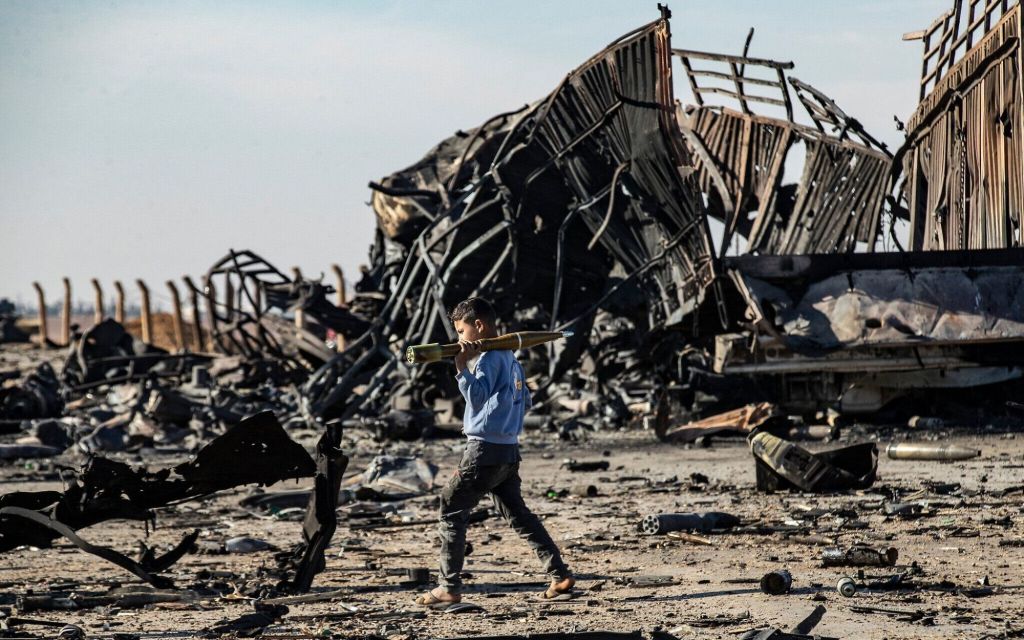
Israeli Prime Minister Benjamin Netanyahu appears to be moving forward with his plan for a “Greater Israel.” In a significant escalation, Israeli troops entered 20 kilometers into the Syria-Israel international buffer zone near the Golan Heights just 48 hours after a regime change in Syria. Additionally, the Israeli Air Force conducted airstrikes on 500 targets in Syria within the past 24 hours. The strikes targeted Syrian naval bases, weapons depots, airports, and other critical military infrastructure.
Following the coup in Syria, Netanyahu stated in a video address that the agreement regarding the Golan Heights buffer zone was made with the Syrian government, which “no longer exists.” On September 27, 2024, Netanyahu addressed the United Nations, presenting two maps that depicted Iran, Syria, and Iraq in black, labeled as “The Curse,” while countries like India, Sudan, and Saudi Arabia were marked in green as “The Blessing.” These maps clearly outlined the concept of a “Greater Israel,” including the West Bank of Gaza, the Golan Heights, and Palestinian territories as part of Israel.
Israel Justifies Attacks on Syria
Israel justified its actions in Syria by citing two main concerns: preventing a repeat of the October 7, 2023, incident and ensuring chemical weapons do not fall into the hands of extremist groups, which could pose a direct threat to Israel. Reports suggest that Israeli forces have destroyed key Syrian military assets, including weapons stockpiles, tanks, and naval ships.
The UN’s chemical weapons watchdog has urged Syrian authorities to secure any remaining chemical weapons. However, with Damascus currently under the control of Hayat Tahrir al-Sham (HTS)—a group linked to ISIS—there is concern that such weapons could fall into the wrong hands.
What is the Concept of Greater Israel?

The idea of Greater Israel refers to the larger territory that historically housed the ancient Jewish state. The concept, proposed by Theodor Herzl in the 19th century, encompasses areas from Egypt’s Nile River to the Euphrates, extending from Medina to Lebanon. This would include parts of Egypt, Lebanon, Syria, Iraq, Saudi Arabia, Jordan, and all of Palestine. Some experts believe that the United States supports this vision as it aligns with its strategic interests in maintaining dominance in the Middle East.
Earlier this year, U.S. President Donald Trump remarked that Israel is “too small compared to Middle Eastern nations” and hinted at exploring ways to expand its size.
Syria in Chaos: A Nation Fragmented
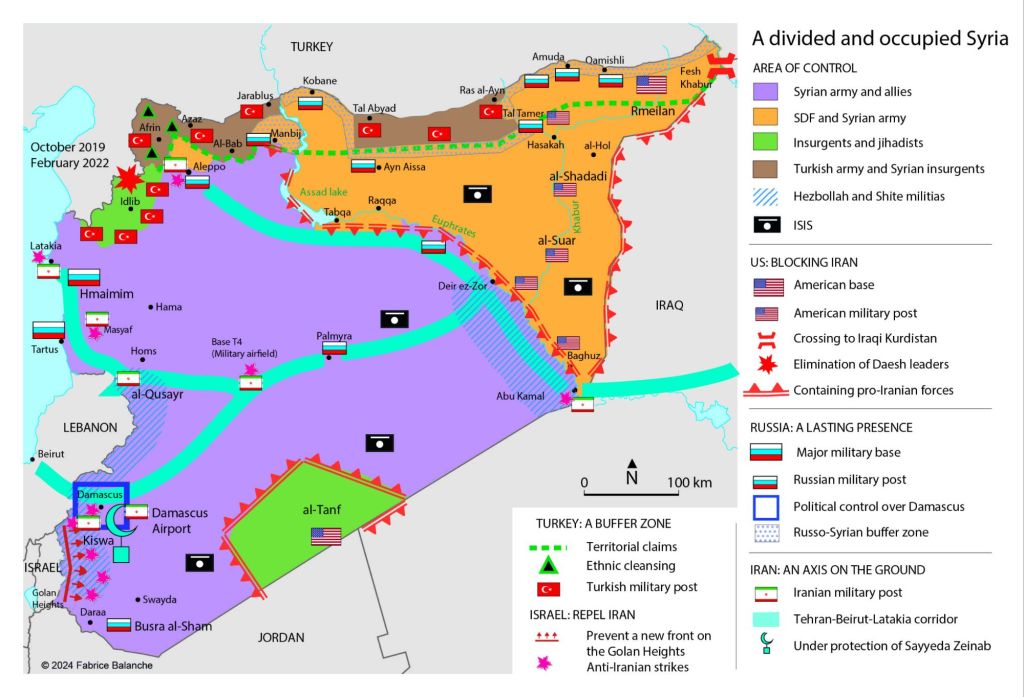
Syria has been ravaged by over a decade of civil war, leaving it divided among various rebel factions. The recent ousting of President Bashar al-Assad has further destabilized the country, with multiple factions now vying for control:
U.S.-backed Kurdish Syrian Democratic Forces (SDF): Dominant in eastern Syria, the Kurds have long sought an independent state, encompassing populations in Syria, Iran, and Armenia.
Hayat Tahrir al-Sham (HTS): This group, inspired by Al-Qaeda and ISIS ideologies, has seized control of central and western Syria, including parts of Damascus.
Syrian National Army (SNA): Formed from defectors of the Syrian Army, this faction operates in northwestern Syria.
Islamic Extremist Group (ISIS) : Limited to smaller areas in central Syria.
Turkey, the U.S., and Israel have played significant roles in Syria’s upheaval. While Israel and the U.S. back Kurdish forces, Turkey supports HTS and has occupied northern Syrian territories since 2016.
Israel’s Strategic Moves
Israel’s longstanding support for Kurdish independence may aim to aid in the creation of a Kurdish state or integrate Kurdish-controlled areas into Greater Israel. Current reports indicate that Israeli forces have already seized 10 kilometers of Syrian territory in the Golan Heights and are positioned just 25 kilometers from Damascus, poised to advance further if necessary.
As international observers monitor the situation, concerns grow about extremist groups, such as Hayat Tahrir al-Sham, gaining access to chemical weapons. The UN has called on Syrian authorities to secure these weapons, but with Damascus now under HTS control, the threat looms large.
This conflict raises questions about the region’s future stability and the broader implications of Netanyahu’s vision for Greater Israel.
 The free voice