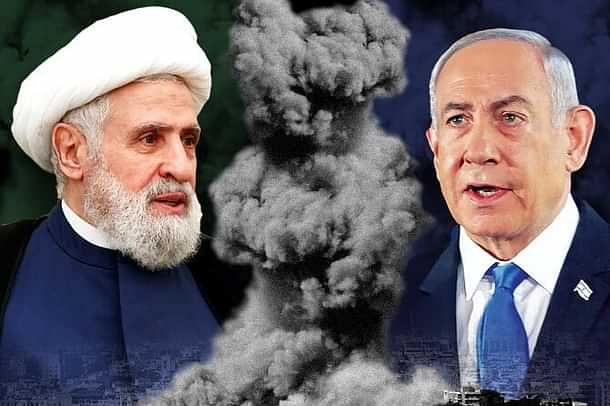
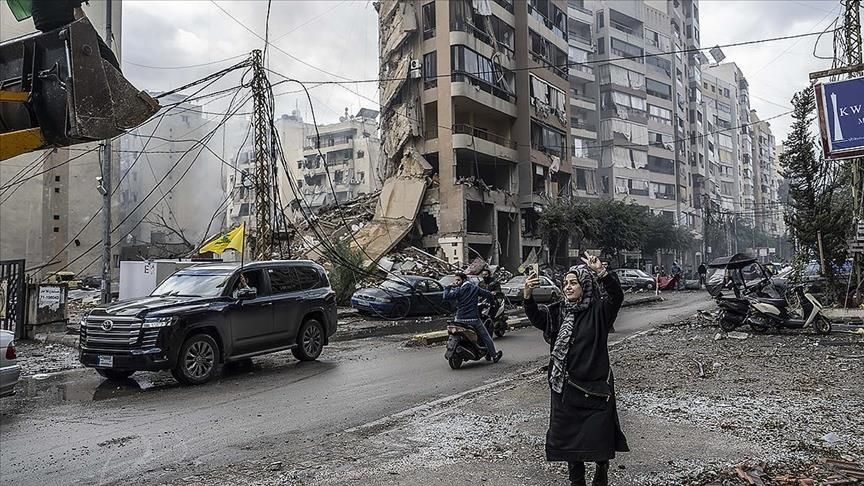
On November 27, 2024, a ceasefire was announced between Israel and the Lebanese armed group Hezbollah. This ceasefire comes after the ongoing conflict between Hezbollah and Israel, which began following Hamas’s attack on Israel on October 7, 2023. The brutal fighting between the two sides has now come to an end. In the course of this bloody conflict, over 4,000 Hezbollah fighters and 3,000 civilians have lost their lives. Moreover, nearly 2 million people in southern Lebanon have been displaced, fleeing to Syria and other countries. The death of Hezbollah leader Hassan Nasrallah had intensified the war, but with the assistance of the U.S. and France, the hostilities now appear to be winding down.
What Does the Ceasefire Agreement Entail?
With the mediation of the U.S. and France, Israel and Hezbollah have agreed to a ceasefire. According to the terms of the agreement, Hezbollah is required to withdraw its fighters from southern Lebanon within 60 days and refrain from constructing new infrastructure near the Blue Line, an unofficial boundary between Lebanon and Israel. Additionally, Israel must withdraw its military forces from southern Lebanon, while Lebanese troops are tasked with ensuring that Hezbollah does not establish any new military positions or weapon stockpiles near the border with Israel.
A similar agreement was made between Israel and Hezbollah in 2006, which led to the cessation of hostilities. Under that agreement, the presence of armed troops other than UN peacekeepers and Lebanese soldiers was prohibited near the Blue Line.
Key Factors Leading to the Israel-Hezbollah Ceasefire:
- Economic Strain: Israel is currently engaged in six major conflicts, including with Iran, Syria, Hamas in Gaza, Hezbollah in Lebanon, Houthi rebels in Yemen, Shia forces in Iraq, and in cyber warfare. Over the past year of conflict, Israel has spent over $60 billion. This escalating expenditure has caused a 1.5%-2.0% decline in Israel’s GDP. Coupled with rising inflation, public dissatisfaction was growing, further pressuring the government to seek an end to the conflict.
- Shortage of Weapons and Logistics: While Israel possesses some of the world’s most advanced military technologies, prolonged warfare has led to a shortage of spare parts and ammunition. The situation worsened when the U.S. and France, two of Israel’s allies, stopped supplying long-range missiles and critical weapons. France refused to provide weapons, accusing Israel of using them to kill innocent civilians in Gaza. In response, Israeli Prime Minister Benjamin Netanyahu criticized French President Macron for his stance.
- Weakening of Hezbollah: After the death of Hezbollah leader Hassan Nasrallah and several senior commanders, Hezbollah’s strength diminished significantly. The breakdown in communication and the psychological pressure on its fighters, combined with logistical shortages, forced Hezbollah to accept the ceasefire.
- Fear of Trump’s Return in the U.S.: Iran, the primary backer of Hezbollah, has been providing substantial financial and military support. With Donald Trump set to potentially return to power, Iran is acutely aware that he is one of its fiercest critics. During his previous term, Trump imposed harsh sanctions on Iran. Iran seeks to avoid further economic devastation, thus pushing for an end to the conflict before Trump’s potential return to office.
- International Court’s Decision: The International Court issued an arrest warrant for Benjamin Netanyahu, holding him responsible for the massacre in Gaza. Although the U.S. is not a member of this treaty, 123 countries are, and they are bound by its terms. Countries like the U.K., France, and Canada are signatories. If Netanyahu travels to any of these countries, he could be arrested. This decision added to the international diplomatic and moral pressure on Israel.
- Biden’s Diplomatic Move: U.S. President Joe Biden also seeks to secure a diplomatic victory in the Middle East, hoping to broker peace before Trump’s possible return to power. Trump had repeatedly stated during his campaign that he would end the war within 24 hours of taking office.
Benefits of the Ceasefire for the World and India:
The cessation of hostilities between Israel and Hezbollah would bring peace to the Middle East. Iran would also avoid direct conflict with Israel, helping stabilize the global oil market. Recently, when Israel attacked Iran, the latter threatened serious consequences for Israel and its allies, including Saudi Arabia and the UAE, whose oil reserves Iran had reportedly planned to target. Such actions could have led to a sharp rise in global crude oil prices, potentially destabilizing economies worldwide, including in the U.S., India, and other countries.
A prolonged Israel-Hezbollah conflict could have escalated into direct confrontations between Iran and Israel, which would have been detrimental to India due to its strong ties with Iran and its critical role in the European trade route. Recently, India and Iran signed a 10-year lease agreement for the Chabahar Port, a vital strategic and economic asset for India.
The end of this war would thus not only stabilize the Middle East but also safeguard India’s economic and diplomatic interests, particularly in its growing relationship with Iran and its strategic role in the region.
 The free voice