Canada has reportedly blocked social media pages of the Australian news outlet Australia Today after it aired External Affairs Minister S Jaishankar’s press conference in Australia. The move has raised concerns over Canada’s commitment to freedom of speech and further strained already tense India-Canada relations following recent diplomatic clashes and temple attacks in Canada.
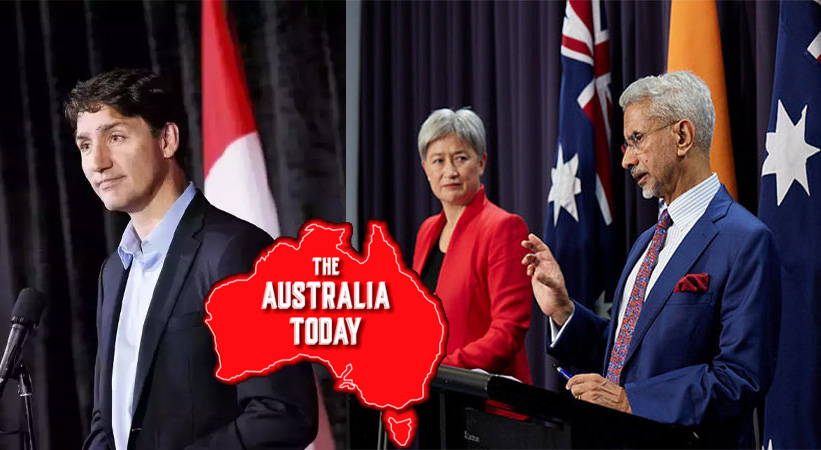
Canada has recently banned various social media pages and accounts of the Australian news outlet Australia Today for airing India’s External Affairs Minister S Jaishankar’s press conference. Mr. Jaishankar, during his media interaction with Australian Foreign Minister Penny Wong, had spoken about Canada’s allegations against India without any shared evidence. He also highlighted the growing influence of Khalistani elements in Canadian territory. This comes shortly after a violent attack on a Hindu temple in Brampton.
MEA Questions Canada’s Move
Randhir Jaiswal, spokesperson for the Ministry of External Affairs, said, “We understand that the social media handles and pages of this particular outlet, which is an important diaspora outlet, have been blocked and are not available for viewers in Canada. This happened just an hour or a few hours after this particular handle carried the press conference of S Jaishankar along with Penny Wong, and the outlet also had several articles on the Australia visit of the External Affairs Minister, as also an interview of him. We were surprised. It looks strange to us.”
Canada’s Allegations and Strained Ties
Tensions between India and Canada have been high since last year’s killing of Khalistani separatist Hardeep Singh Nijjar, whom India classifies as a terrorist. Canadian officials accused India of involvement in the murder without concrete evidence. Even Home Minister Amit Shah’s name was dragged into the controversy, a claim heavily criticized by Indian officials. Canadian sources later admitted to being the origin of the information shared in The Washington Post in October.
Canada has also added India to its list of nations posing cyber threats, a move seen as politically charged. These developments reflect the Trudeau administration’s inconsistent stance on free speech. Indian diplomats in Canada have reportedly faced pressure, and India’s high commissioner has been called back. Diplomatic ties between the two countries continue to weaken.
PM Modi Condemns Temple Attack
Following the attack on a Hindu temple in Brampton, Prime Minister Narendra Modi made a rare and strong statement. On X, he said, “I strongly condemn the deliberate attack on a Hindu temple in Canada. Equally appalling are the cowardly attempts to intimidate our diplomats. Such acts of violence will never weaken India’s resolve. We expect the Canadian government to ensure justice and uphold the rule of law.”
Several international media outlets covered Modi’s statement, interpreting it as a firm message to Prime Minister Justin Trudeau.
Global Implications and Five Eyes Concerns
Canada’s actions also raise questions within the Five Eyes intelligence alliance, which includes the US, UK, Australia, and New Zealand. Experts believe internal disputes within this bloc could escalate if member nations begin acting against each other’s media or policies.
Future of India-Canada Relations
With Donald Trump’s return as the 47th President of the United States, global diplomacy is expected to shift significantly. The US shares stable relations with India, and given Prime Minister Modi’s global stature, India’s ties with Canada may take unpredictable turns. As Canada faces criticism for double standards on freedom and security, its global image may continue to decline.
 The free voice
Nice post 🌺🌺
LikeLike